Friday, 26 January 2018

2018
What a lot has happened and nothing related to my love of textiles but I need to return to my creative space so much has caused me to look back and remember the past now I want to start to make room for looking forward. There are two projects that I hope will enable this to happen.

Spring means the opportunity to look at the garden and plan for dye giving plants. So research into seed sources for the plants missing from my garden.


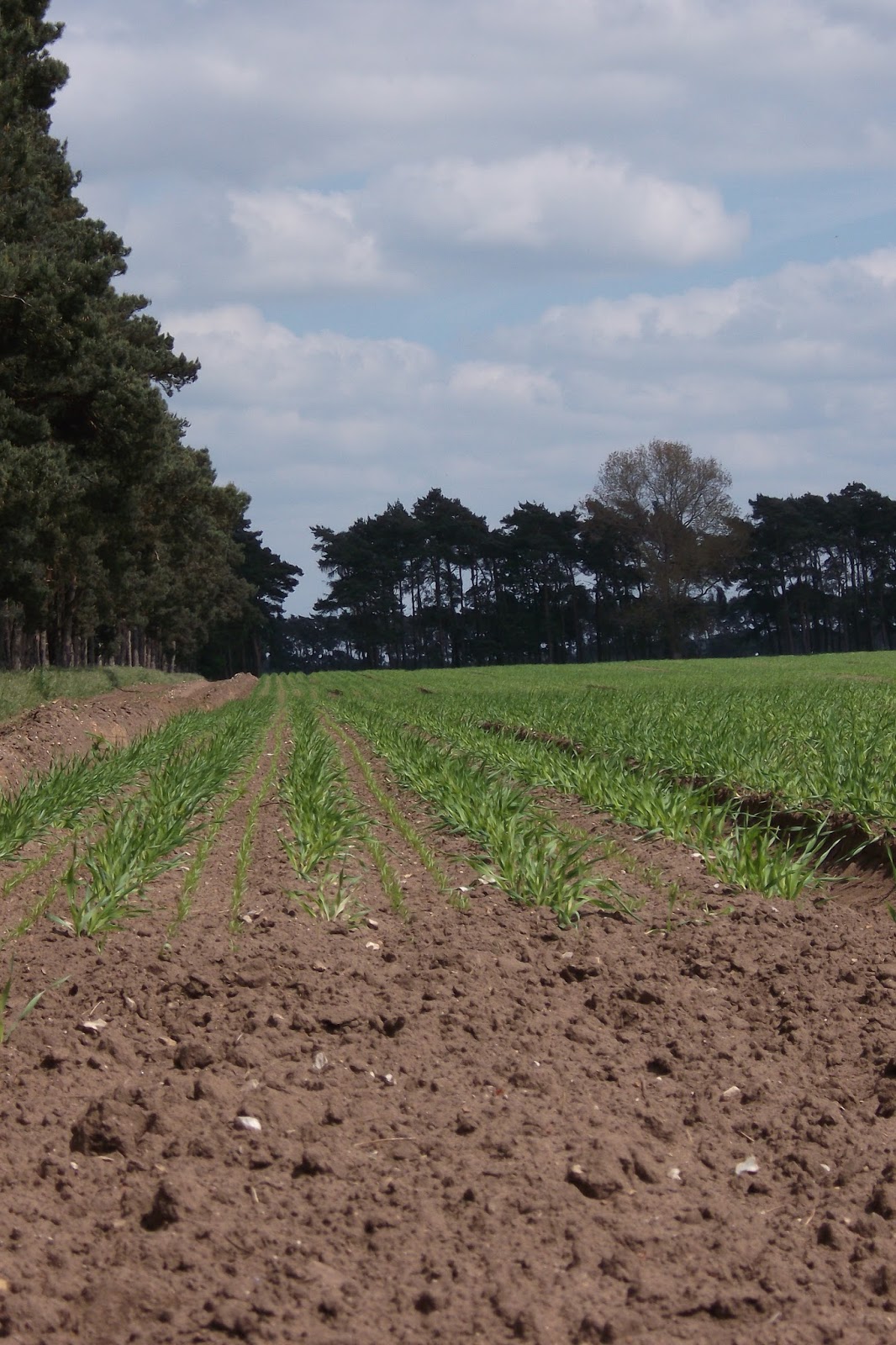
Snow has gone and the garden and forest are waiting for me to get start

Get into the greenhouse and start sowing!!


France and the house which could offer me the chance of my own studio designed for my practice and the beginning of a dye workshop in France. Initially to design and produce cards with colours from locally sourced dyes.
The garden in France with potential!


Friday, 29 July 2016

MASTERS SHOW 5th to 10th AUG

It always takes longer than you expect! The double sided tape couldn't cope with the 35 degrees of heat and there was a line missing from the booklet. But the Show is up!!
All problems sorted and I hope that when I go on Monday to do a final ironing session and wash the scarves that everything is in place. My Show space is much better than I had initially envisioned and that's largely due to the experience of Fine Art tutors who 'do not display as much stuff as textiles'! So I have a larger area and that means that you can appreciate the individual pieces also with the help of our wonderful ladies in the Textile office displaying the pieces has been more successful. How I envied George whose work was on vinyl and upholstered sofa and chair when 2 men just spent an hour 'papering' the walls and the floor space lifted the furniture into place and that was it!! Her work is at the other end of the textile spectrum (if there is one) to mine and I think we respect each others professionalism!
The outcome of the Show may determine my enthusiasm to set up links for talks, demonstrations etc! Also the lack of response (which I think is rude!!!) from Elvedon, the Dean and the Heritage Officer has dampened my enthusiasm.

So watch this space but for now a Show I am proud of!!


HAND WOVEN COTTON SCARVES DYED WITH BLACKBERRY, WOAD, EUCALYPTUS AND INDIGO OVER WELD


SILK SCARVES INCLUDING RUST ECO PRINT


Monday, 18 July 2016

INDIGO

I still am in awe of Indigo dye vats. Sometime ago I bought a water heater to make up a new dye bath with woad pigment from Ian Howard at Woad Inc. The recipe I follow is from Ian ie 9.5 litres of water. Washing Soda dissolved in 1/2 litre of water. 10gms of pigment in with the Soda and added to the heated water. 10gms of Hydros added and mixed gently. I actually know it off by heart but the actual chemistry of indigo takes a lot of understanding. The Hydrosulphate releases the pigment so that it will lay onto the fibre but when you take the fibre out of the dye bath it is the oxygen in the air which changes the green colour of the dye bath to the blue of indigo. I wanted to dye one of my final pieces, some scarves and a dress for my daughter so needed more volume. Would adding another 9.5 litres of cold water affect the dye bath well there was only one way to find out! Yes it worked. I am so pleased with the results as well.
To the glory and diversity of indigo. Women in Afghanistan

And one of my efforts using wax resist.
And when I went on one of Ian Howards workshops. I learn something new every time


Tuesday, 12 July 2016

Almost there!!

A week away to write the Critical Evaluation and a family wedding followed by college reunion was a good break away from dye pots!!
The CE was interesting and gave me the space to look back at the ways this project has developed changed and ended in a place that I feel comfortable. The booklet and working in collaboration with George has been so worthwhile. The end product isn't perfect but is a useful tool for future plans to present my work to various audiences. It will be difficult to make it pay for itself in sales but I need to consider it as a loss leader which, if successful could lead to profit.
                   
                                           COVER DESIGN  for COLOUR NATURALLY
So I have 4 large pieces all needing something small like stitching to complete and I am pleased with the outcomes after all these weeks. I feel that I was able to make decisions with the knowledge I have built over the last 2 years. The final 4 are all different and I think that shows a broad understanding not only of the dyeing process but also eco print with iron wax resist and the colour potential.

HANGING 1 - THE FIELD : WINTER SUNSET


I am pleased with the colours here and this shows the development from design to resist to final outcome.
HANGING 2 - THE FIELD : SPRING SHOOTS


Monday, 27 June 2016

In search of grey

Working on the final pieces has been a challenge and achieving the grey colour in my samples impossible. Analysis of the process has led to me doubling the strength and the immersion time but the outcome is no way near as successful as my sample. The sample on the left is the 'cold' grey that I want to reflect my observations of the field on a snowy day. The larger piece on the right is 'browner'.

I am staying with friends for a week and will use this time to write my first draft of the critical evaluation and reflect on my designs. Do I persevere or do I develop my next design following the seasons and the new growth in the field?

Monday, 13 June 2016

Booklet and challenges

After changing my direction from product to presentation many new pathways have opened up to my Masters.
One of those is a booklet. I contacted the local authority to identify who was in charge of the museum and heritage of the local area. A visit to a local heritage site, another to a shopping complex which also organises special events for members led to an explanation document to outline services I could offer ie talks, demonstration, workshop, exhibition etc. But I felt that I needed something more professional and thought out. My primary objective is to share my passion for natural dyes and inform people of the importance of sustainability. so -Historical evidence, My research, Dye colours and plants, The processes and The design development.
At NUA there was an exhibition of 1st year Graphic designers and this made me consider a booklet that could have a more detailed explanation of my practice with lots of images. I identified 3 students whose work appealed to my idea and emailed the tutor. I have always returned to the Malhaffa book that I bought in Morocco and used it as the basis of my idea. Everything started very slowly and after 3 weeks I began to wonder if the booklet would happen. THEN within a week I had met the students tutor done the text and images and met the publisher. I n the end the booklet isn't going to be as refined as I had imagined but the costs dictate what I can achieve and it could be just a start. Also after mentioning SDC in the text I contacted them for approval and they have indicated an interest so I think it was the right decision.

An example:
                                                      THE INTRODUCTION

 
INTRODUCTION
In 1965 archaeologists excavated an Anglo Saxon site in West Stow in Suffolk and found evidence of a complete settlement including a weavers’ house. The post holes and weights of the loom were found but no fibres or textiles. However, textiles have been found dating back to the Neolithic period in other ancient sites. My practice as a natural dyer is based in the West Stow and the area around Kings Forest where I feel the influence of the people who have lived here and the beauty of the changing landscape. The materials for my natural dyes are largely sourced here or from local growers such as The Dye Garden in Mildenhall, limiting road miles as sustainability is a prime objective for my work. During my studies for a Master’s degree I was able to research the extraction of colour and develop a greater understanding and knowledge of the dyeing process.


I am using that knowledge to experiment with new plants and to apply to the development of my textile designs. The Field is a project inspired by land on the edge of Kings Forest and has led to research into the history of Breckland and man’s toil to farm this arid land.


So now it is a wait to see how George gets on with designing the booklet and how well Kingfisher publish it!!
But my challenge is to translate my designs onto large scale with the added challenge of the dye vessels, stretching the fabric for the resist and rinsing - probably in the bath! 
It is a case of no more delay let's get it done!! My diary has been such a help to organise my schedule with lots of adjustments but it stops panic attacks!


Wednesday, 25 May 2016

Landscape, natural beauty and the arts.

This book edited by Salim Kemal and Ivan Gaskell helped me to consider the relationship of the Field to me and my current practice.
Here are some extracts :
P10
..the visual arts of painting and film .. allow a particular access to nature that determines the object and the texture of its appreciation... the technology available for representing objects, determines the conception of nature and so of natural beauty.
Is textiles regarded as visual arts?
P14
The analyses of Barrell and Sitney suggest .. that an understanding of natural beauty and landscape that ignores their construction will end in nostalgia.
My research into the history of the field connected me with its history and its development from Breckland to cultivated agricultural land.
in the late 18c and 19c ..nostalgia took the form of including figures of rustics and their implements and their work on the land. ..including these figures was to suggest that no disjunction existed between the ideal image of the rural life and its actuality and offer reassurance about the state of the poor in England.
P16
Underlying this truck with nature was the fact that it had been cultivated, its harshness and jaggedness removed by the ...work of labourers. Nostalgia became more difficult; landscape bore again the imprint of God's grace and gift, but wrapped in some deadly threat that had to be overcome by taming and ordering nature.
Unburdening nature of the impact of history, of human engagement or of grace, landscape is simply another collection of sensations.
Would I have been drawn to this field before man had imposed his control? It was the shapes created by the lines of pine trees and the light between the shapes that first attracted me to stop. Then I learned that those trees were the key to open mans ability to control this land by reducing the impact of the wind on the soil.
P24/5
In Crawfords 'Comparing natural Beauty and Artistic Beauty .. he goes on to consider criticisms of the meaningfulness of comparisons between artistic and natural beauty. ..works of art are intentional .. requiring meanings and interpretation and criticism.. the aesthetic appreciation of nature .. is restricted to an appreciation of its sensuous surface. In nature no intention constructs these objects therefore they are qualitatively distinct from their artistic counterparts. two responses to this claim are possible : to argue that natural beauty possesses the expressive and semantic properties that art does or to understand art and nature on a continuum based on some general principle that makes comparisons meaningful.
An alternative mode of comparison may emphasize that interdependence of fine art and natural beauty. Some works relate to nature in that they depict it. Others directly make use of the natural environment in their artistic realization and are .... about their relationship with it.
This is where I can relate to Crawfords essay and feel that it has helped me consider my work a relationship and not a depiction. This has released me from strving to order and relate the parts of the design to reality but to see their relationship to each other as a pleasing sensuous experience.

So this is where I am at the moment.
Trying to combine and layer dyes to give the feel of winter.
Design the shapes of that field in winter that interprets rather than depicts.

This design is still too much of a depiction!


Experimenting with resist using clamps, wood and pegs but may try using the wax to have a more exact definition                                                                                                              

Sometimes the stain from the wood gives a useful colour but cannot be planned.